Netflix Paid $600M for 16 People. Technicolor Fired 3,000 Without Severance. Read Both Together.
Two major events shook the global VFX industry within a single year, and I believe reading them side-by-side tells a far more honest story than any corporate trend report you'll find today.
First, the dark side: February 2025. Technicolor—one of the largest global VFX conglomerates—shut down its entire India operation overnight. Roughly 3,000 skilled artists in Bengaluru and Mumbai were fired via a cold, automated email. They were locked out of their workspaces the very same morning. The company had quietly stopped paying salaries before the announcement, and the HR contact email provided for questions bounced immediately.
Then, the upside: March 2026. Netflix acquired InterPositive, a tiny, stealth 16-person AI startup co-founded by actor-director Ben Affleck.
The acquisition price? Up to $600 million.
Let that contrast sink in:
- One company. 3,000 dedicated human beings. Zero severance. Locked doors.
- Another company. 16 people. $600,000,000.
If that jaw-dropping disparity doesn’t force you to stop and examine where our industry is headed, I’m not sure what will.
What InterPositive Actually Does (And Why It Matters)
Before we dissect the implications, we need to understand exactly what Netflix actually bought. InterPositive is not a broad video generator like OpenAI’s Sora or Runway Gen-2. It doesn't generate dreamscapes from raw text prompts.
What it does is far more practical: it builds custom machine-learning models trained entirely on a production's own dailies (raw footage shot on set every day). The model studies the visual DNA, lighting structure, and color colorimetry of that specific movie.
Once trained, the software lets filmmakers and post-production crews automate tasks that traditionally require hundreds of hours of manual labor: rotoscoping, wire-removal, background cleanup, and even late-stage relighting. These are precisely the detail-intensive, frame-by-frame tasks that have historically been outsourced to large, lower-cost facilities in India and Southeast Asia—exactly like the ones Technicolor operated.
Ben Affleck and his team had been building this in complete stealth since 2022. By the time Netflix closed the deal, almost no one in Hollywood knew they existed. And Netflix’s $600M payout is heavily contingent on performance targets, which means they are making a massive bet that this tool will save them ten times that amount in the coming years.
The Silent Pressure on Volume Work
Technicolor's sudden collapse had many financial layers: massive corporate debt, strategic pricing blunders, and the long shadow of the 2023 Hollywood writers' strike.
But there is a deeper, structural layer that the industry trade papers chose to ignore: the specific nature of the work done in those Indian facilities.
It was rotoscoping. Background cleanup. Wire removals. Tracking support. Detail-intensive volume tasks. For over two decades, the global VFX pipeline relied on simple labor arbitrage: keep expensive creative decisions in Los Angeles or London, and ship the massive volume of manual frame-by-frame work to where labor costs are lower.
But InterPositive—and the category of machine-learning models it represents—completely disrupts this math. It doesn’t make outsourced labor cheaper; it removes the need for human volume altogether.
I am not saying Netflix bought InterPositive because Technicolor collapsed. But both events are pointing at the same cold truth from different directions: the entry-level and volume-based roles that sustained thousands of VFX families in South Asia are under immediate, structural pressure.
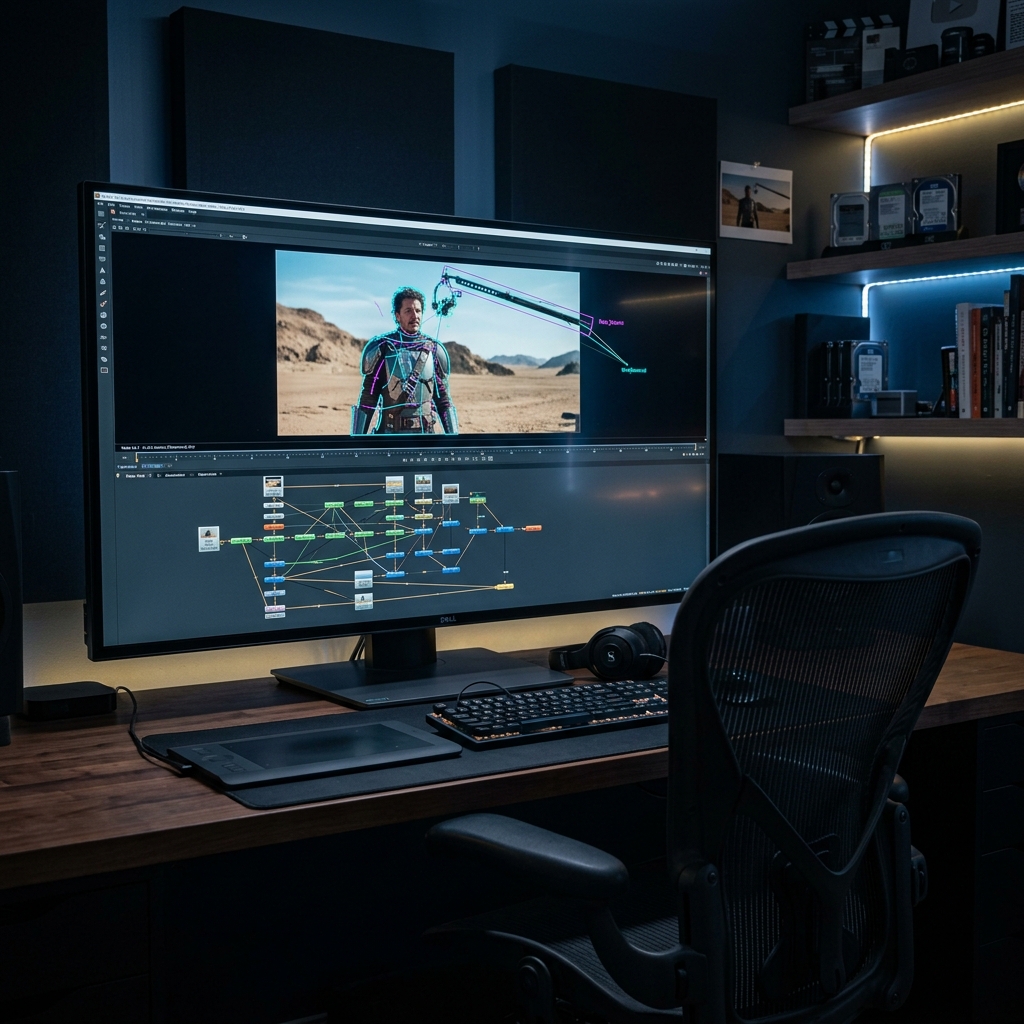
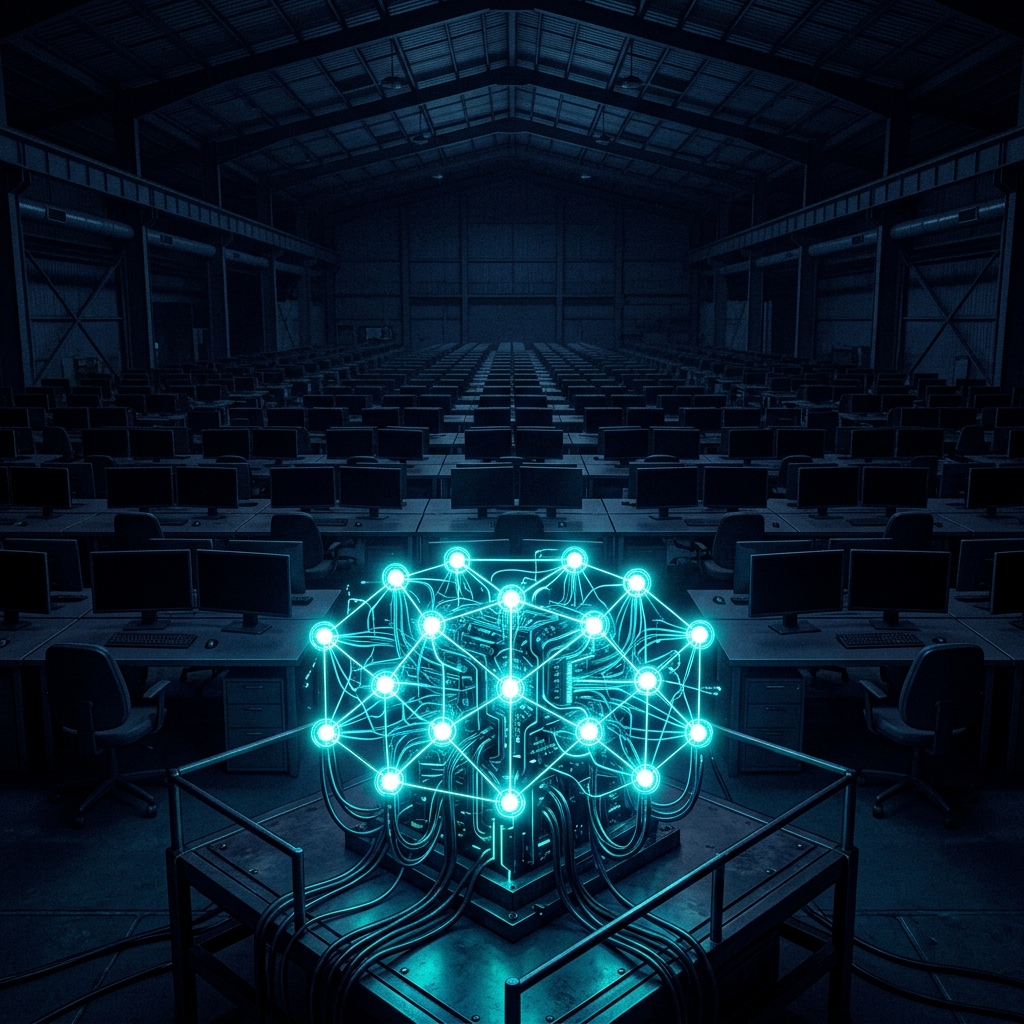
FIG_01: The silent transition — high-volume rotoscoping and background prep are moving from rows of physical artist seats directly into automated cloud algorithms.
The Part the Studios Won't Say Out Loud
Netflix’s official press release was carefully written, full of warm phrases about "empowering filmmakers" and "giving directors more creative control in post-production."
But let’s be real. "Filmmaker empowerment" is corporate speak for "reducing the head-count of our vendors." A Deadline report from April 2026 revealed that prior to the acquisition, InterPositive was pitching studios aggressively on direct post-production cost savings.
I’m a realist—Netflix is a business, and if a $600 million technology can recoup its cost by slashing tens of millions of dollars in manual labor across a hundred high-end originals, the corporate math is a no-brainer. But as artists, we must be honest about what is being automated and whose chairs are being emptied.
The "Model Weights" Era
Here is another piece of timing that I find incredibly telling: In early 2026, Netflix reportedly walked away from a massive opportunity to acquire Warner Bros. Discovery—a legacy Hollywood giant with physical studios, thousands of employees, and historic soundstages.
They passed on that physical infrastructure, and instead spent $600M on sixteen programmers and a folder of model weights (the mathematical values that define a trained neural network).
This is a clear signal about where the future value of visual media is being concentrated. It’s not in physical real estate, expensive render farms, or massive global staff lists. The value is in the intellectual property of the algorithm.
💡 My Honest Take: The Ladder Disappears from the Bottom Up
I have been in this industry long enough to remember multiple waves of "AI will kill VFX" panic. Usually, the tech was too primitive, or the marketing hype was way ahead of the actual pipeline reality.
This time feels different. InterPositive isn't selling a generic AI pipe dream; they solved a narrow, highly repetitive, and extremely expensive bottleneck at the high end of production.
The immediate work being automated isn't my job today. But it was the work of 3,000 artists in India last year. And as these tools evolve, they will slowly climb the complexity ladder. That is the fundamental nature of automation: the ladder disappears from the bottom up.
My advice to you is to be fiercely honest with yourself. Look at the tasks you perform daily. Does your role require genuine creative judgment, composition taste, and physical lens understanding? Or is it a series of high-volume, pattern-recognition steps that could be solved by a sufficiently trained model?
If it's the latter, it is time to start climbing. Focus on the art, the integration, the pipeline design, and the supervisor-level judgment. The light at these workstations is still shining, but the chairs are emptying fast. Keep learning, keep pushing your craft, and make sure your value goes beyond the frame.