The Engineer Behind Every Green Screen You've Ever Keyed
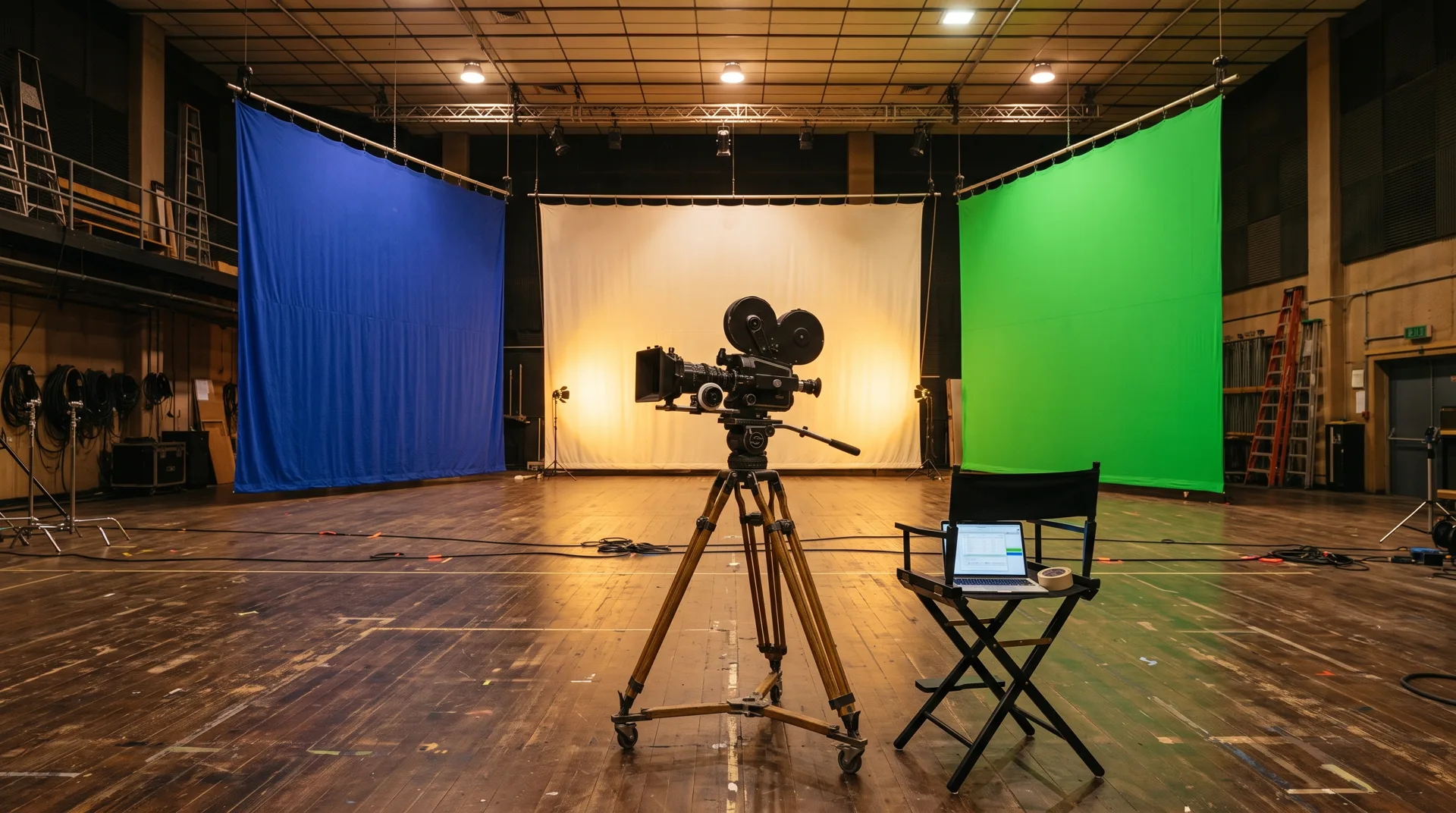
I drop an IBK on a green screen plate almost every week. Pick the screen colour, tweak a few sliders, check the edges, move on.
And for years I never once asked: who figured this out in the first place?
The answer is a story about blue light, yellow lamps, a handful of glass prisms, and one stubborn engineer who spent his whole life fighting the exact same edge problems you and I fight today. Once you know it, you'll never look at your keyer the same way.
1940: The Blue Screen Is Born
Let's start before computers. Before video, even.
In 1940, a special effects artist named Larry Butler and his team used a blue-screen travelling matte on The Thief of Bagdad. The film won the Academy Award for Best Special Effects.
Quick jargon check. A matte is just a black-and-white mask: white where you want to see the foreground, black where you don't. A travelling matte is a matte that changes every frame, because the actor moves. Today we call that an alpha channel and Nuke hands it to us for free.
Back then, every one of those masks was made photochemically, in a film lab, with optical printers and a lot of patience.
It worked. But it wasn't pretty. Blue light spilled onto the actors, edges glowed, and anything see-through was a nightmare. Glass, smoke, blowing hair. Sound familiar? Those are still the three things that make me sigh when I open a new plate.
Petro Vlahos and the "Colour Difference" Trick
Enter Petro Vlahos. Born in 1916 in New Mexico, engineering degree from UC Berkeley in 1941, then work at Douglas Aircraft and Bell Labs before he moved into motion picture research after the war.
He didn't invent the blue screen. What he did was much more useful: he made it actually work.
He refined the process for Ben-Hur (1959) with what he called a colour difference approach. In the lab, the blue, green and red records were separated and then recombined in a clever way.
Here's the idea in plain words, simplified a lot. In the real world, almost nothing in front of the camera is "more blue than it is green and red" except the blue screen itself. So if you measure how much the blue channel beats the other two, you get a very good guess of where the screen is. And because it's a difference, not an on/off switch, you keep the soft in-between values. That's where hair, smoke and glass live.
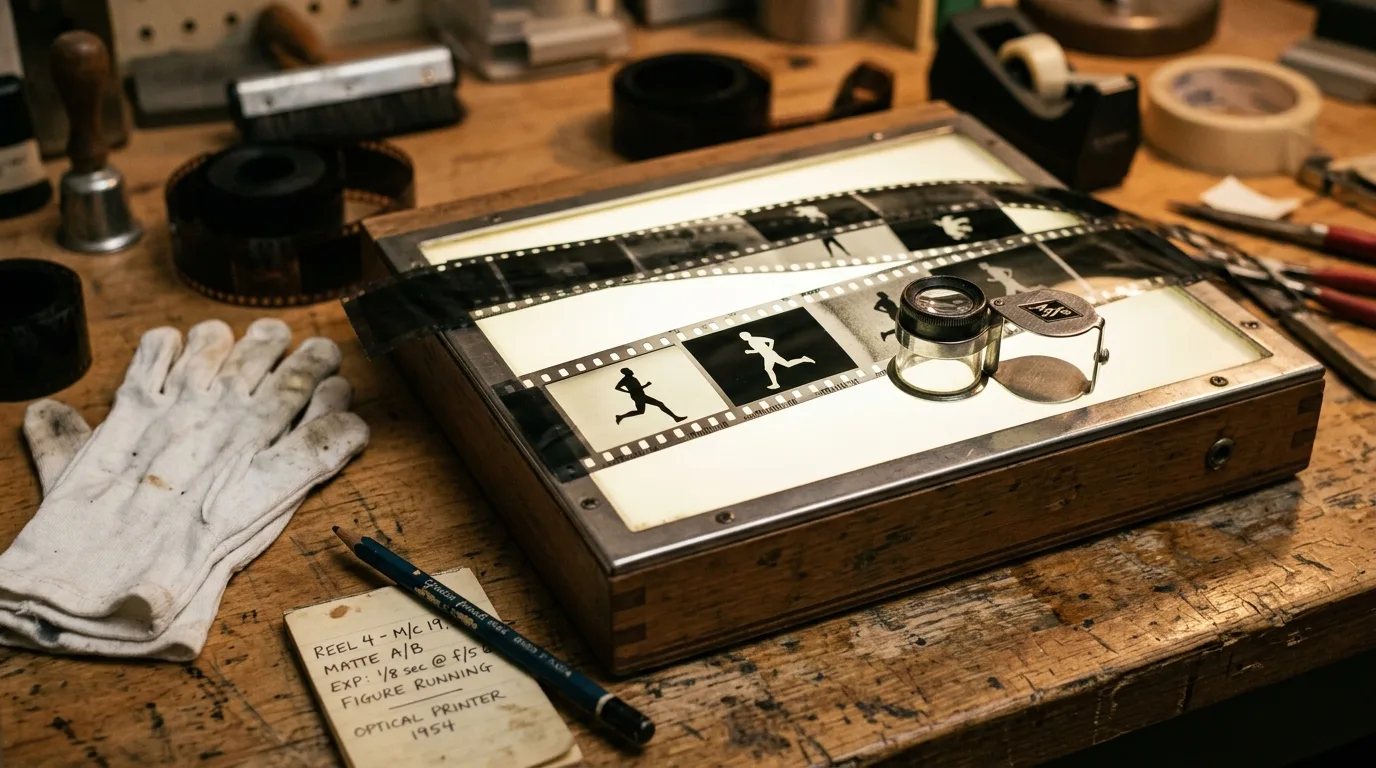
FIG_01: Before alpha channels, every matte and counter-matte was a physical strip of film. Illustration, not an actual production element.
This is the part that gave me goosebumps. Open any modern keyer and the core logic still smells like this. Screen channel versus the other channels. Soft values preserved. Despill to clean up the colour that leaked onto the subject. We're basically running a 1950s film lab idea at 24 frames per second on a GPU.
The Yellow Screen Detour: Sodium Vapor
Now for my favourite plot twist, because history is never a straight line.
In the late 1950s and through the 60s and 70s, another system showed up: the sodium vapor process, or "yellow screen". Disney used it heavily.
The trick was physics, and it's beautiful:
- The actor stood in front of a white screen lit by sodium vapor lamps. Those lamps give off an almost pure single colour of yellow light, around 589 nanometres.
- That wavelength falls into a gap that colour film barely sees. So the actor could wear anything, any colour, and skin tones stayed natural.
- Inside the camera, a beam-splitter prism sent the light to two films at once: normal colour film for the performance, and a black-and-white film that was very sensitive to that yellow light. That second film was the matte.
So you got a clean matte, shot in-camera, at the same moment as the action. No guessing in post. Honestly, as a compositor, that makes me a little jealous.
Wadsworth E. Pohl, Ub Iwerks and Petro Vlahos received an Academy Award for the process as used on Mary Poppins. Ub Iwerks also used it on Hitchcock's The Birds for those fluttering wings, which are exactly the kind of fast, semi-transparent edges that still keep roto artists awake at night.
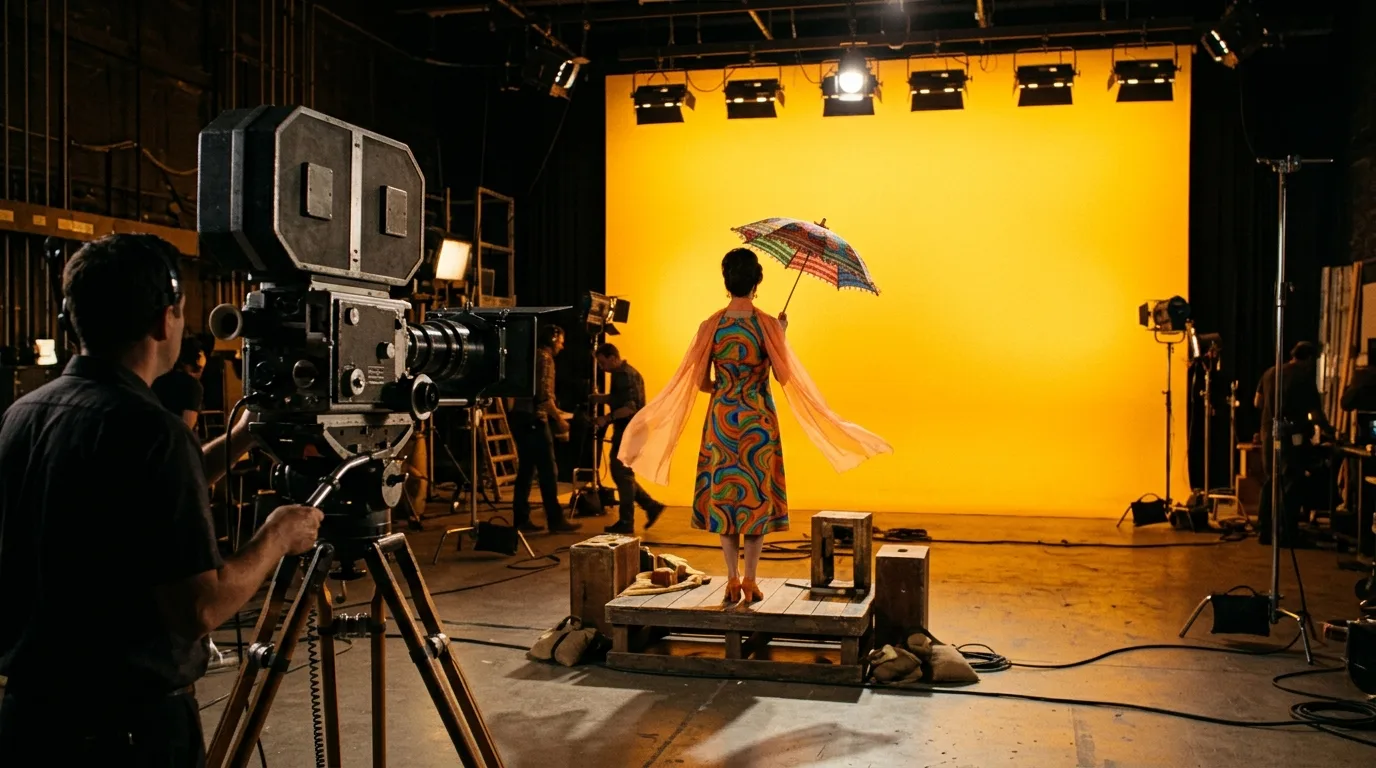
FIG_02: An illustrated take on a sodium vapor stage. One narrow yellow wavelength on the screen, full colour freedom on the performer.
So why did it die? Cost and scale. The lamps and screens were big and expensive, and the special prisms were rare. Reportedly only three were ever made. As blue screen kept improving, yellow screen faded out, with Dick Tracy (1990) cited as its last known use.
But here's the fun part. In 2024, Corridor Digital showed a modern version built with a filter setup by researcher Paul Debevec. And in 2025, the Walt Disney Archives published images of a surviving prism. Good ideas don't really die. They just wait for better hardware.
From Film Lab to a Box: Ultimatte
Vlahos didn't stop at film. In 1976 he co-founded Ultimatte with his son Paul. It brought his matting ideas into video, and it won an Emmy in 1978.
Over his career he collected several Academy honours, including the Gordon E. Sawyer Award, and he held more than 35 patents. According to AWN's obituary, his process was used on films from The Birds to the original Star Wars trilogy and Life of Pi.
He passed away in 2013, aged 96. Next time your key comes out clean on the first try, maybe give him a small nod.
Why Your Screen Turned Green
If blue was the classic, why is almost every stage I walk onto now green?
Mostly because of how digital sensors are built. Most cameras use a Bayer filter, a tiny grid of colour filters over the sensor. Half of those little cells are green, a quarter red, a quarter blue. More green samples means a cleaner, less noisy green channel. Cleaner channel, cleaner key.
Blue hasn't disappeared though. It still makes sense when the costume or props are green, or when blue spill is easier to hide in the scene than green spill. Pick the screen for the shot, not out of habit.
What This Means When You Open Nuke Tomorrow
Knowing the history isn't just trivia. It actually changes how I approach a key.
Look at Nuke's IBK. Foundry describes it as using the image's own pixel values instead of one picked colour, and building a processed screen image that keeps the screen's colour variations. That's the same spirit as Vlahos: measure the screen properly, and let the difference do the work.
So here's a habit I want you to steal. I call it "The Vlahos Check":
- Before you touch the keyer, look at R, G and B on their own. Ten seconds each. Where is the screen strongest? Where is it dirty or uneven?
- Find your "hard three" early. Hair, smoke or motion blur, and anything transparent. Plan for them before they surprise you.
- Treat despill as its own job. Spill is the oldest problem in this story. It deserves its own branch in your script, not a checkbox you forget about.
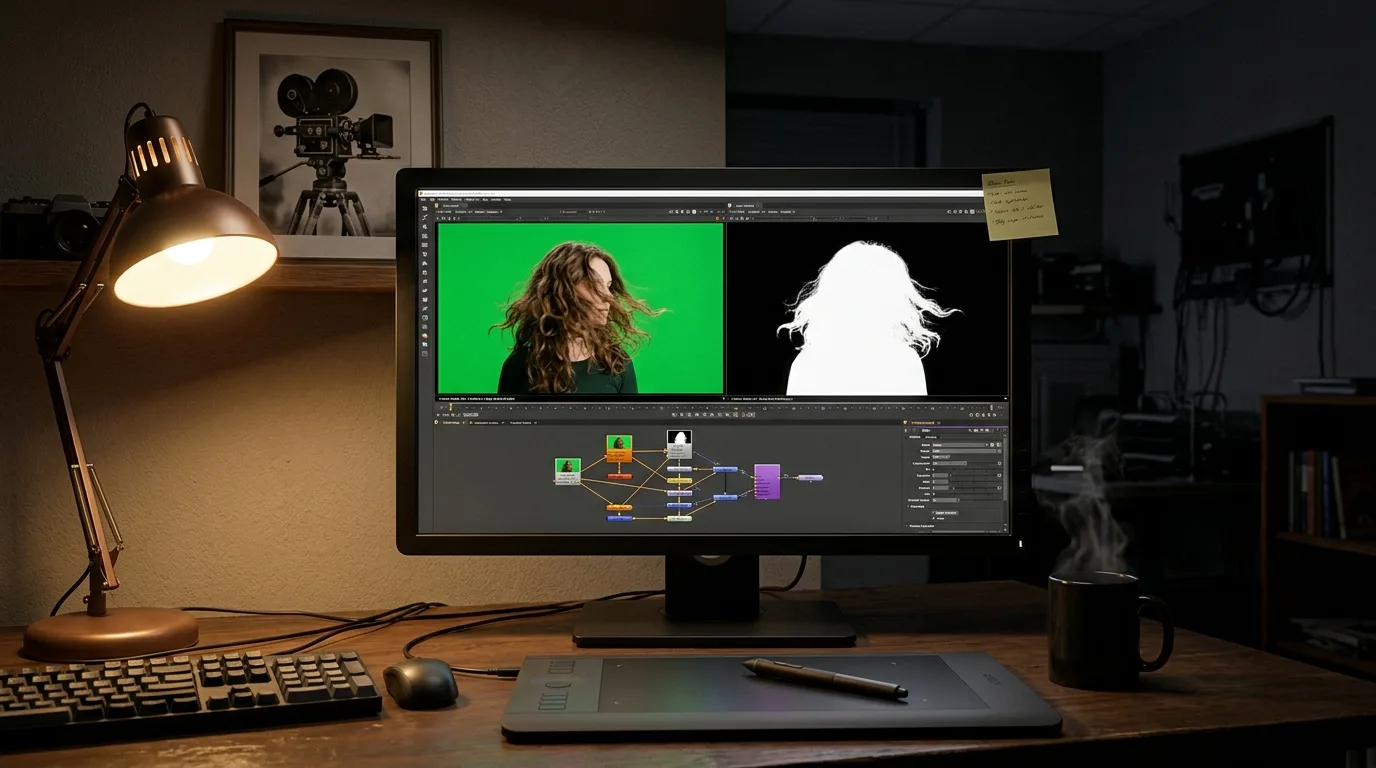
FIG_03: Same problem, new desk. Eighty years later we are still judging the soft values between screen and subject.
💡 The Wrap-Up: You're Part of a Very Old Craft
I didn't start in a film lab. I started as a computer teacher, failed at a few things, and slowly found my way into comp. So learning this story felt personal. The problems I wrestle with every day are the same ones people were solving with prisms and chemicals decades before I ever opened Nuke.
That's weirdly comforting. Your bad edges aren't a sign you're bad at this. They're a puzzle that smart people have been chasing since 1940.
So next time a plate fights you, slow down, check your channels, and remember you're standing on some very tall shoulders. Then go make that key beautiful.